

Be The Trap Door
not everything is futile

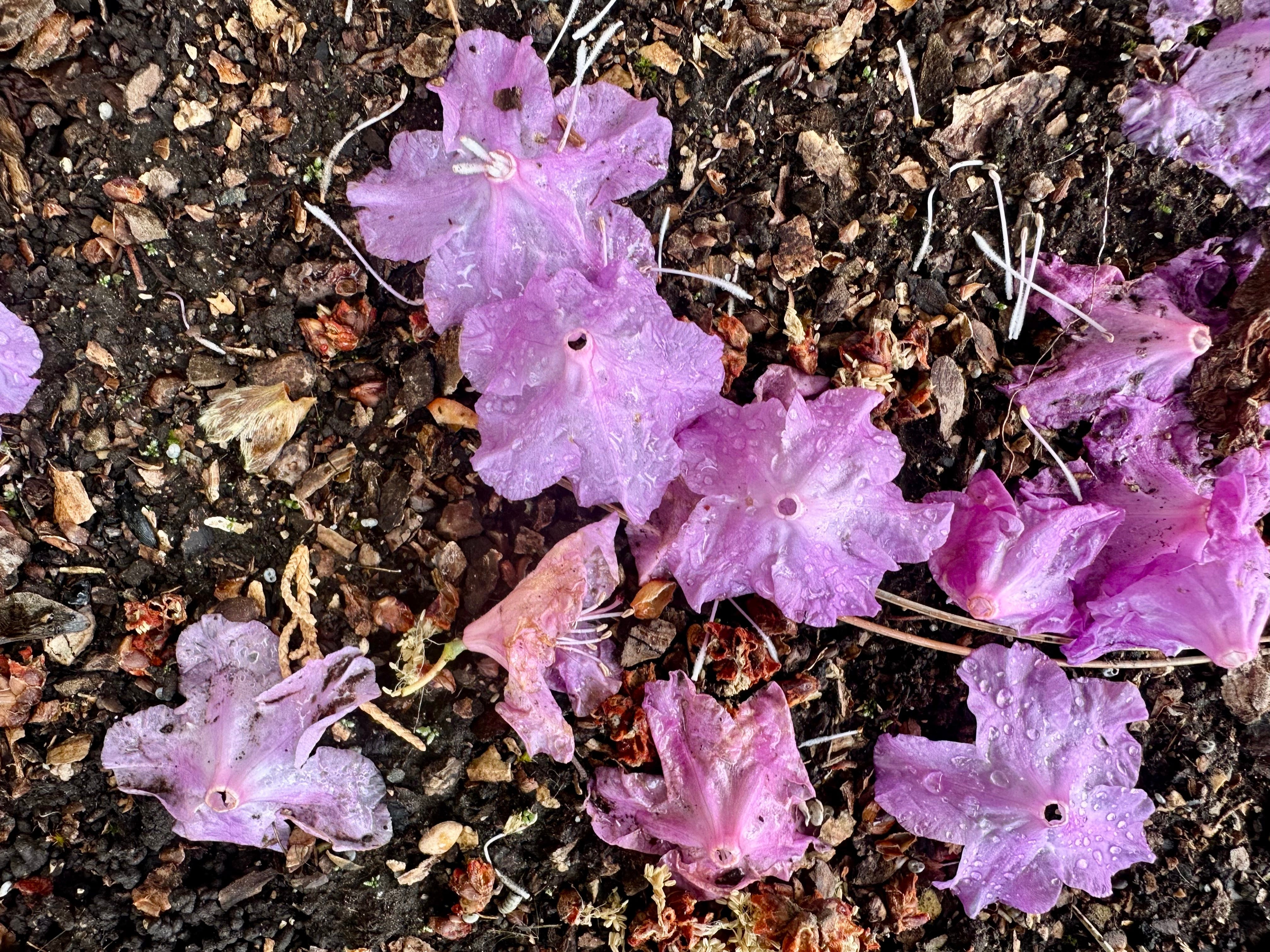
Greetings from eastern Washington!
Well, it’s been a few weeks. I paused my weekly offerings as I mulled over what the heck I’m up to with these little arrivals in your inbox.
I can’t say I have any grand answers. But I did have something to write, and it felt worthy of sharing.
I’m also going to roll out a new, tangible, let’s-make-this-more-real kind of offering: a quarterly, printed, full-color edition of Precipice & Cusp mailed to you, to hold in your hands and carry with you into the nooks and crannies of your world. Exciting!
If you’d be keen to have a physical copy of Precipice & Cusp mailed to you 4 times a year (one per season) please respond to the poll below as I work out the logistics. The quarterly printed edition will feature one original full-length essay + original photography + little word treasures and thematic strands as seeds for the season.
The printed edition will be a paid feature, while the digital version will remain free. (The printed edition will include prose material NOT in the digital version; some photographs may appear in both locales but there will be lots of new goodies in the printed edition.)
Read on for a new essay below! Would love to hear what you think. Book recs and new guest interviews on their way!
Cheers,
Jennifer

Be The Trap Door
Jennifer Ruth Keller
This last week we’ve been keeping an eye on our neighbor’s mostly outdoor cat while they’re traveling. A few days ago, after checking in on Skiddy’s food, she started following us home. Sensing the opportunity to be of service to Skiddy, to offer the cat companionship in her apparent loneliness, my daughter gently slipped into action.
She urged me to walk slow enough for the cat to feel accompanied in her tentative track behind us. I sensed my daughter’s excitement as we crossed the street pavement and Skiddy remained close at her heels. She was focused, trying not to go too fast for Skiddy to get scared off, and slink away, while also sustaining a gentle alacrity with her steps.
We led the cat into our back yard, where my daughter tried to make Skiddy feel at home. I went inside, careful to embody the technique I’ve had to hone so well: Don’t get in the way. Allow her experience a wide berth. Attend from afar if not apart.
Over the next hour I’d glance into the yard every now and then. My daughter was accompanying Skiddy on her tour of the yard, coaxing her along in the exploration of new territory. Eventually I looked out to find them sitting together in the shade beneath one of the pine trees, Skiddy nuzzling into her side, my daughter giving me the thumbs-up sign she uses to signal “I’ve got this. You can go now.”
From inside the sliding back door I looked upon them, the communication between child and animal unmistakable, the simple ease of their togetherness as normal a thing—as stunning a thing—as the sun through the pines. I was witnessing what I’d seen countless times before, in different iterations and circumstances, the reason why living with a child is, for me, to be haunted on a near daily basis: She’s her own trap door. Without, it seems, even having to try.
****************
The concept of “the trap door” in the story structure of a novel goes more or less like this: a protagonist goes through some kind of unanticipated experience, after which point there is no going back to the old way of doing things. They’ve whoooooooshed through a passageway, and, once on the other side, a different way of being, of living, becomes required. Old defenses and strategies of the self no longer work. The character becomes, in an elemental way, forced to live undefended from the very thing they most need to engage
For months I’ve been intrigued and fascinated by the trap door concept. First, as a writer. But then, like an intoxicating, just-enough perfume, I’ve drawn upon the image—and its meaning—everywhere, recognizing its applicability to the whole of life.
It’s been easy enough to look at events and situations as “trap door” moments in a life. But the more I’ve played with the concept and its structuring effects, I’ve shifted from its typical usage to consider something else that’s become gripping: What would it mean to be one’s own trap door? That is, rather than an external circumstance being the unanticipated occasion for a threshold shift in behavior, what if a barrier in the self—some delicate yet stubborn flap of resistance—could just give way? Whooooooooosh!
************
A few weeks ago on a Friday morning, when my husband had the day off and our daughter was at school, I sat down at our kitchen table where he was finishing his coffee and watching one of his preferred YouTube channels about building earthenware structures with handmade tools. My husband and I are from similar and different worlds. In the case of the trap door concept, and the rabbit holes avid readers and writers tend to go down, we’re from different worlds.
I asked him if I could lay something out for him. Said it would take a few minutes. Of the many things I can count on him for, it is that, if I approach him humanely without bombardment, he’s game to receive whatever I bring from one of the different, non-shared worlds I may wander around in.
Across the table I told him about the trap door concept in the context of novel writing or story construction. Then I reminded him of the thing about myself I’d been wrestling with for a long time—that I keep seeming to hit interior barriers or blockages at inopportune times, or too frequent times, with the people I’d most want to be at ease in my heart with. Most notably, with him. Throughout my life, when in lived proximity with people who are supposed to be my confidants, or fellow travelers, or lovers, or comrades, an oscillation between open-hearted ease and withdrawn-heart enclosure has tended to be my jam. He listened to it all, was patient with where the turn, or the point, would arrive.
“Here’s the thing I’ve been wondering,” I got to after a few minutes of exposition, once I’d laid the groundwork for my main idea, “maybe I just need to be the trap door…..Like, there’s not going to be some external change that precipitates the internal shift.” I looked at him, the air between us a connective tissue, but not electric (he’s too steady for that, has seen too much to be jolted by my reveries of thought). I waited a beat, and continued: “What if it’s as simple as me being the trap door?” He didn’t say anything, but he didn’t look away. And then a few seconds later, the pause somehow not awkward, the composure on his face telling me he was aware he’d have to say the next thing in a careful kind of way, without too much bemusement, he said simply and evenly: “Yes.”
*******************
So far, across 2026, I’ve been thinking and writing here about the notion and practice of repair. Of what the term connotes, of what might be possible with nuanced, nitty gritty versions of the practice in daily life, in both the human relational realm, as well as in the landscapes of the earth where repair has become required.
All of that remains the case. Repair is an art we live less well without. And also: more and more, as I go back again and again to the delicately sturdy testing ground of actual life, and the varied motions of my heart, I’m coming to accept the necessity of a different pattern of living, because sometimes repair isn’t coming, and because sometimes it takes too damn long: Be The Trap Door.
And so I’m taking my cues where I can glean them—like the in-built way a child’s defenses (if there even are any) dissolve without thought, or calculus, as to what they might be losing when they open their field to another; like the way the five pines in my backyard offer no barrier to entry, if I go to them with gentle right attention; like the way my husband has no preconditions for what must be met before someone is worthy of being listened to, and talked with, in free-ranging conversation; like the gut-deep laugh I’ve had my whole life as a kind of work-around for the internal door of my heart.
I know for many people right now things seem futile. But I believe this one crucial thing isn’t: Be the trap door.

Jennifer, this is so beautifully written. Thank you, thank you, thank you.
I like to have readings in my hand and can easily save to easily go back to review and enjoy.